
Faced with the challenges of decarbonisation and urban congestion, last-mile delivery operators are looking to transform their logistics models. Among them, Stuart, a European on-demand delivery platform, is gradually developing cleaner solutions, particularly through the use of electric cargo bikes. As highlighted by Phil Jeudy in his analysis, this shift could well reshape the future of urban delivery across Europe.
Stuart: A Key Player in Sustainable Delivery
Founded in Paris in 2015, Stuart has expanded into more than 128 cities across Europe, including France, the United Kingdom and Poland. The platform connects businesses, retailers and independent couriers to provide fast and flexible delivery services.
In its 2024 Sustainability Report, published in June 2025, the company highlights several achievements:
More than 50% of deliveries carried out using low-emission vehicles;
A 24% reduction in emissions per parcel compared with 2021;
The expansion of cargo bike deliveries, particularly during the Paris Olympic Games;
The launch of a delivery option carried out entirely using low-emission vehicles.
These results demonstrate a commitment to combining logistics performance with environmental responsibility.
Cargo Bikes: An Effective Alternative to Commercial Vehicles
In city centres, commercial vehicles face growing challenges: heavy traffic, limited parking and access restrictions in the most polluted areas.
Electric cargo bikes offer a practical solution to these constraints. More compact and manoeuvrable, they make it easier to navigate urban areas and complete multiple stops on short delivery routes.
For delivery companies, the benefits are numerous:
Reduced emissions during operation;
Easier navigation through congested areas;
More convenient parking close to delivery destinations;
Ideal for frequent, short-distance deliveries;
Potential reductions in operating costs.
Combined with urban logistics micro-hubs, cargo bikes also bring goods closer to customers and help optimise last-mile delivery operations.
Delivery Quality: A Key Priority
The transition to cargo bikes is not just about the environment. It can also improve the customer experience.
In food delivery, for example, shorter journey times and reduced handling help preserve product quality. Insulated or refrigerated containers also make it possible to transport fresh produce and meals under suitable conditions.
Cargo bikes are therefore particularly well suited to restaurants, food retailers and local businesses.
However, it remains essential to adapt equipment to the goods being transported and to cold chain requirements, particularly for frozen products or longer distances.
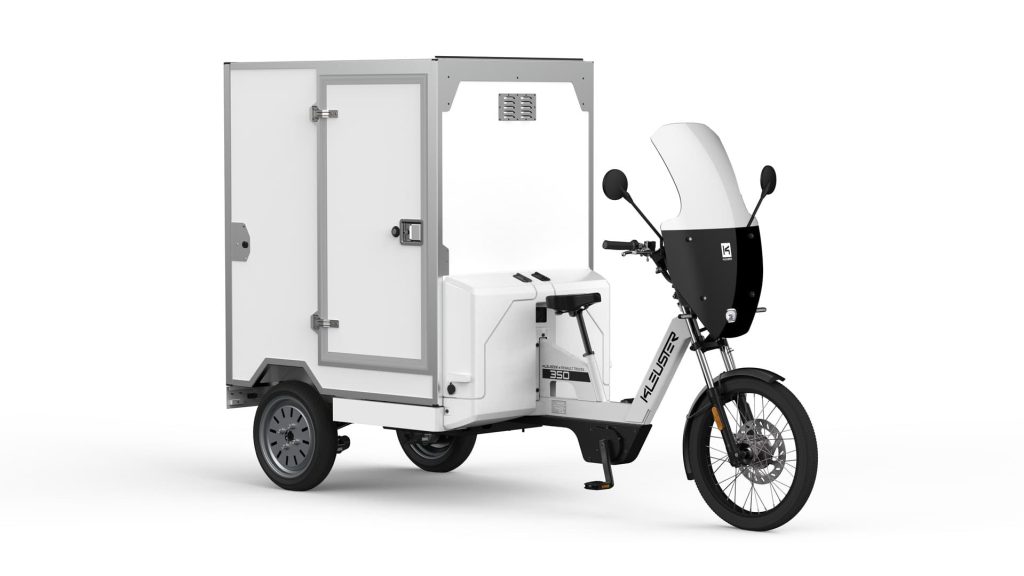
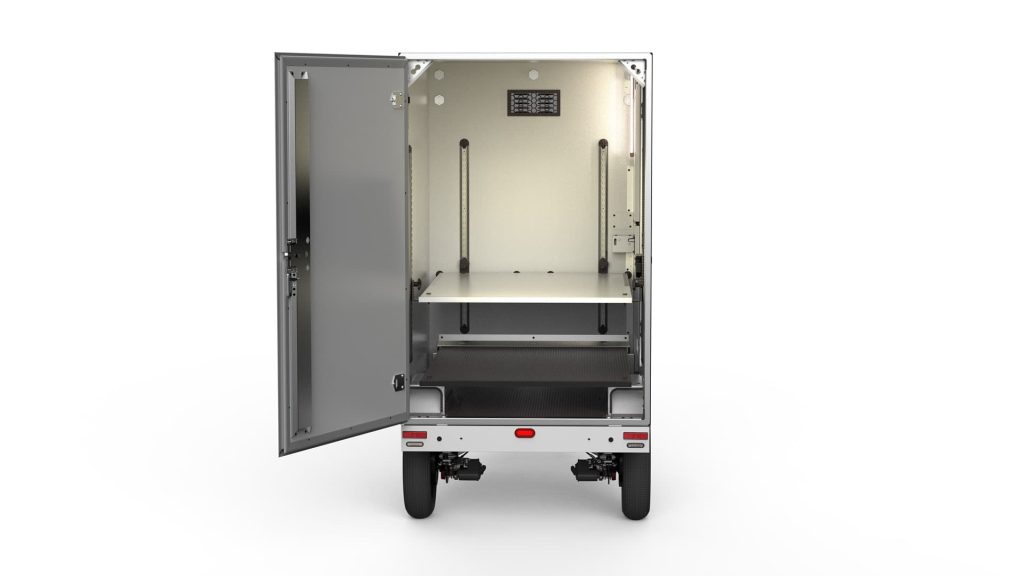
Kleuster Box350: A Solution Designed for the New Challenges of Urban Delivery
To support this transformation, Kleuster develops professional solutions specifically designed to meet the demands of urban logistics.
The Box350 is designed to meet the needs of operators looking to expand their low-emission delivery services without compromising operational efficiency.
With a 300-litre cargo capacity, it is designed for multi-stop routes, parcel deliveries and urban freight transport.
Its modular design allows the cargo compartment to be adapted to different professional applications, while its secure compartments make delivery route organisation easier.
Its interchangeable LiFePO4 battery system also makes it suitable for intensive use, helping ensure greater operational continuity.
Compact and well suited to urban micro-hubs, the Box350 offers a complementary alternative to traditional commercial vehicles for local deliveries.
Towards a New Generation of Urban Logistics
Stuart’s example shows that the transition towards more sustainable delivery is already underway. The growing use of low-emission vehicles, the increasing adoption of cargo bikes and the development of micro-hub networks are opening up new opportunities for logistics professionals.
The challenge is no longer simply to reduce the environmental footprint of deliveries, but to build logistics models that are efficient, flexible and economically viable.
At Kleuster, we support this transformation by providing cycle logistics solutions tailored to the needs of professionals and the challenges of tomorrow’s cities.
Discover Phil Jeudy’s full analysis of Stuart’s decarbonisation strategy and the role of cargo bikes in the new urban logistics landscape.