
Cycle logistics is experiencing growing momentum across Europe, and Poland is now emerging as a particularly promising market. As highlighted by Phil Jeudy in his analysis, cities such as Warsaw, Kraków, Wrocław and Gdańsk offer several favourable conditions for the growth of cargo bikes: urban density, traffic congestion, parking challenges and a growing commitment to reducing pollution.
In response to these challenges, businesses and local authorities are beginning to rethink their delivery methods, prioritising more sustainable solutions better suited to city centres.
Cities Well Suited to Cycle Logistics
Poland’s major cities have relatively compact urban centres, numerous local businesses and often short delivery distances.
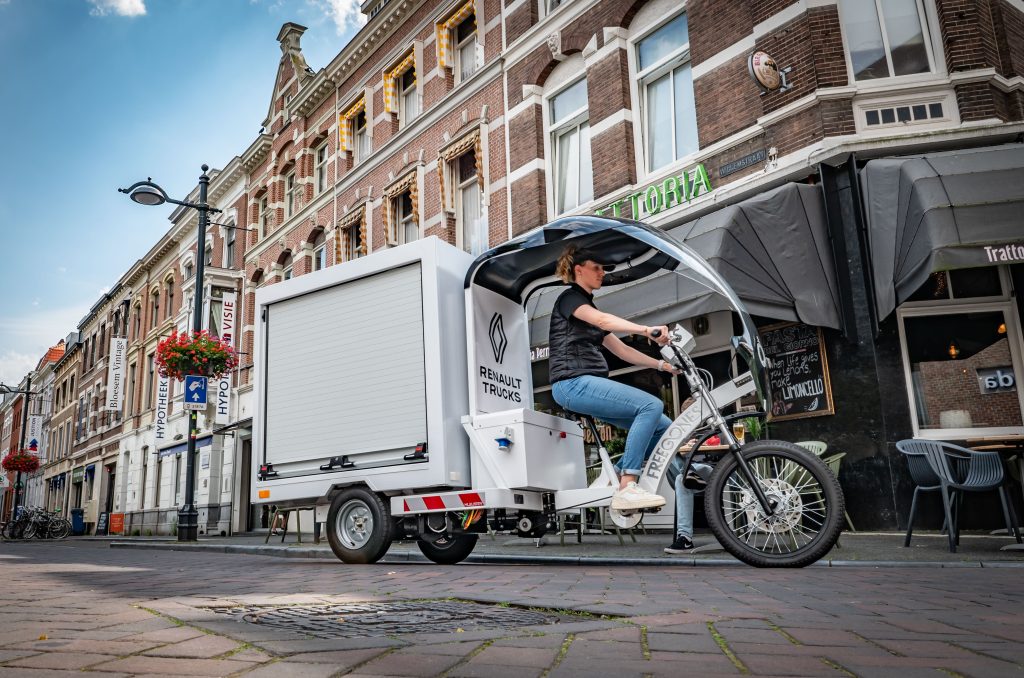
Cargo bikes therefore represent an attractive alternative to commercial vehicles, particularly for journeys of less than 5 kilometres. They make it easier to navigate congested areas and can handle various types of deliveries, including groceries, meals, pharmaceutical products and e-commerce parcels.
At the same time, public policies are evolving. Traffic restrictions for the most polluting vehicles and the expansion of cycling infrastructure are gradually encouraging the adoption of new logistics solutions.
Real-World Initiatives Accelerating Market Growth
The development of cycle logistics in Poland is not based on potential alone. Several industry players have already launched pilot projects.
In 2023, DPD Polska was operating around 80 electric cargo bikes in several major cities, including Wrocław and Poznań.
Local authorities are also contributing to this momentum. In Gdynia, projects such as CityChangerCargoBike and CoBiUM are encouraging individuals and businesses to adopt cargo bikes. In Poznań, a logistics micro-hub pilot project tested the transfer of parcels from commercial vehicles to bicycle couriers for deliveries in the city centre.
These initiatives demonstrate growing interest in logistics models better suited to the constraints of urban environments.
A Favourable Ecosystem and Business Model
Poland benefits from its proximity to European markets where cycle logistics is already well established, particularly Germany and the Netherlands. It can therefore draw on their experience while developing its own ecosystem, with local players such as Urvis and Hazay.
From an economic perspective, potentially lower operating costs than in Western Europe, particularly in terms of labour and commercial property rentals, could help improve the profitability of delivery operations.
European and national funding programmes dedicated to sustainable mobility also provide opportunities to support investment and develop new logistics infrastructure.
What Are the Market Prospects for 2030?
The outlook outlined by Phil Jeudy points to a market undergoing significant change.
Key trends include:
-
Cargo bikes and light electric vehicles could account for 25–30% of last-mile deliveries in Europe’s 20 largest cities.
-
Professional fleets are expected to increasingly combine commercial vehicles with light electric mobility solutions.
-
Artificial intelligence could improve delivery route planning and operational management.
-
Regulatory recognition of cargo bikes as professional vehicles is expected to progress.
These figures remain projections and will depend in particular on investment, public policies and the evolution of logistics organisations.
Poland: A Market to Watch for Cycle Logistics
Although Poland’s cycle logistics market is still developing, several indicators are encouraging: public initiatives, the first professional fleets, local pilot projects and growing interest from delivery operators.
The next step will be to turn these pilot projects into sustainable business models capable of expanding on a larger scale.
For transport companies, retailers and mobility stakeholders, Poland therefore represents a genuine growth opportunity.
Kleuster: A Key Player in the Future of Urban Logistics
Faced with the challenges of congestion, decarbonisation and operational efficiency, professional cargo bikes are gradually establishing themselves as a complementary solution to traditional commercial vehicles.
At Kleuster, we support this transformation by providing solutions tailored to the new challenges of urban delivery and the needs of professional operators.
Discover Phil Jeudy’s full analysis of Poland’s potential for the development of cargo bike last-mile delivery.