
Faced with the growing volume of deliveries, traffic congestion and increasingly stringent environmental requirements, urban logistics needs to reinvent itself. Among the solutions available, electric cargo bikes are playing an increasingly important role.
In an analysis exploring the future of cargo bikes within the last-mile delivery ecosystem, Phil Jeudy, former consultant at Kleuster, highlights a paradox: despite increasingly mature technologies and significant potential, the development of cargo bikes continues to face several challenges.
Urban Logistics Undergoing a Major Transformation
The growth of e-commerce has profoundly changed consumer expectations. Companies are now required to deliver faster while keeping costs and environmental impact under control.
At the same time, city centres are facing growing challenges: heavy traffic, limited parking and access restrictions.
New technologies are emerging, including drones, autonomous robots and artificial intelligence. While they offer promising opportunities, their deployment is still constrained by regulatory, economic and technical challenges.
Cargo bikes have one major advantage: they are already a proven and operational solution, capable of addressing many urban challenges.
Cargo Bikes: A Practical Solution to Last-Mile Delivery Challenges
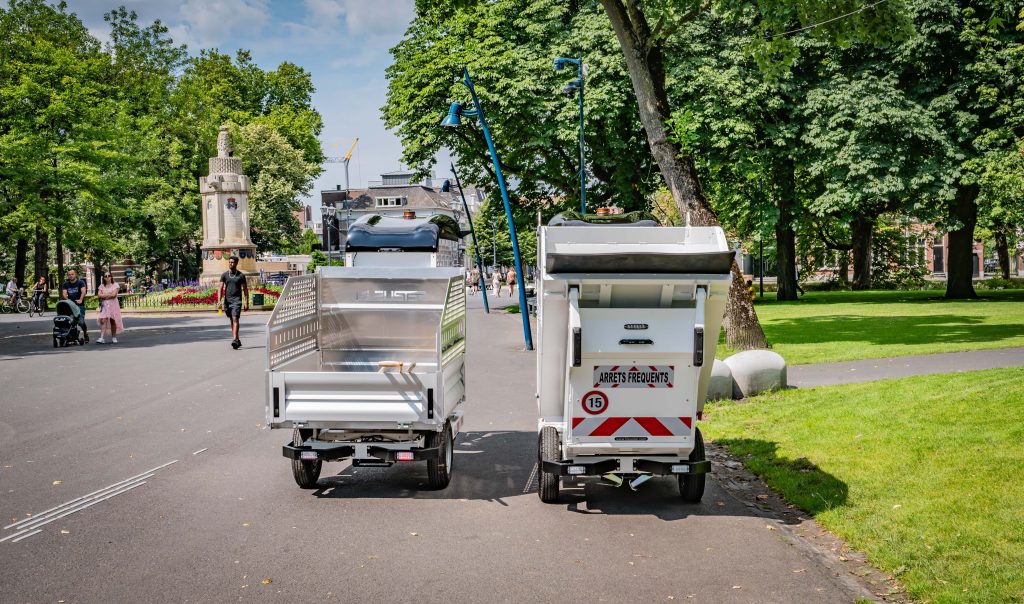
Once considered a niche solution, cargo bikes have gradually become a genuine professional tool.
Their main advantages include:
Accessibility: They make deliveries easier in narrow streets and city centres.
Environmental benefits: Their electric powertrains enable deliveries with zero direct emissions during operation.
Productivity: They help overcome some of the challenges associated with traffic congestion and parking.
Complementarity: They can easily be integrated into fleets combining cargo bikes and commercial vehicles.
The development of urban micro-hubs further strengthens their appeal by bringing goods closer to their final destinations.
Why Is Their Development Still Limited?
Despite their potential, several barriers continue to slow down the adoption of cargo bikes.
1. An Economic Model That Still Needs to Be Proven
Companies need to look beyond the initial purchase price and consider the total cost of ownership, including operating expenses, maintenance, parking and delivery route planning.
2. A Still Fragmented Market
The wide variety of manufacturers and models raises questions about reliability, standardisation and spare parts availability.
Professional operators expect vehicles designed for intensive use and capable of meeting their operational requirements.
3. Insufficient Infrastructure
The development of cycle logistics requires micro-hubs, loading areas and suitable equipment.
Not all cities yet have the infrastructure needed to support this transformation.
4. Long-Established Habits That Are Difficult to Change
Integrating cargo bikes means rethinking delivery routes, goods handling and work organisation.
The transition therefore requires changes to logistics practices, going beyond simply replacing one type of vehicle with another.
What Does the Market Hold in Store by 2030?
The outlook outlined by Phil Jeudy points to a market undergoing significant change.
Key trends include:
Cargo bikes and light electric vehicles could account for 25–30% of last-mile deliveries in Europe’s 20 largest cities.
Professional fleets are expected to increasingly combine commercial vehicles with light electric mobility solutions.
Artificial intelligence could improve route planning and operational management.
Regulatory recognition of cargo bikes as professional vehicles is expected to progress.
These figures remain projections and will depend in particular on investment, public policies and the evolution of logistics organisations.
Kleuster: Supporting the Future of Urban Logistics
At Kleuster, we firmly believe that electric cargo bikes offer a practical response to the new challenges of urban freight transport.
However, their development does not depend solely on vehicle performance. It also requires reliable solutions designed for professional use and capable of being sustainably integrated into existing logistics operations.
The real challenge now is to move from experimentation to large-scale deployment.
Cargo bikes are no longer simply an alternative to commercial vehicles: they are becoming an essential part of the future of urban logistics.
To explore these topics further, discover Phil Jeudy’s full analysis of the future of cargo bikes and their role in last-mile delivery.